Saturday, 26 December 2020

Jesus is not the reason for the season!


As a child growing up in Africa, I loved Christmas. From the new clothes, to nyama choma from the freshly slaughtered goats and playing with my cousins in the sun all day. Importantly I loved that it was Jesus’s birthday. My Lord and saviour was the reason for the season. Normally, I was not allowed to stay up late but during Christmas I would; reading scriptures on the birth of Jesus while thankful for the sacrifice he made. I loved singing Christmas carols and hymns, watching all those cartoons and movies about baby Jesus. I had no doubt Jesus was born on Christmas day. It was my favourite time of the year. 

"Its the most wonderful time of the year"


Even though I was a child, grownups kept reminding me that the world hated Christ and they wanted to take the word Christ from Christmas. Christmas was in danger.

“He’s the reason for the season”

The common example was cited for America and Europe where they were trying to change Christmas to xmas or happy holidays. It made me sad, angry and filled me with a feeling of dread. I was reminded of how Christians had been killed and persecuted throughout the ages. These only made me love Jesus more and increased my devotion to Christianity. The true meaning of Christmas was love, God’s unending love for us that He gave us His only begotten son. They could try but they could not win against LOVE.

However, as I grew up I realised everything was not as black or white as I had been made to believe. It seems the Christian establishment had carefully selected the information I needed to know about Christmas. The information they chose to feed me was aimed at increasing my fanaticism towards my faith not promote critical thinking. As I grew up, I realised Jesus was not born on Christmas day, its meaning was evolving over time from pagan to Christian and presently it meant different things to different people. Further, different Christian groups promoted different views on Christmas, some abstained from it while others fully embraced it. Christmas trees, Santa and gift giving had pagan origins and were heavily commercialised. If that was the case, the world was not chipping away at Christianity, it was just Christmas evolving. I was disappointed. I felt brainwashed and deceived. Imagine being made to believe someone so important “the son of God” was born on a certain day then finding out He was not as an adult. Surely, Christians know better than to treat the foundation of their faith like a Santa Claus fantasy. Though it is easy to get over Santa, how do you reconcile facts from fiction in Christianity? Also, Christianity should not be defined by a single day, say society managed to remove Jesus from Christmas would it really matter to Christians as long as he remains in your heart. The call to all Christians is to win people through love not politics, I doubt God or Christ would mourn over the loss of  Christmas.

I firmly believe that the Christian establishment generally choose information that is beneficial to their cause to brainwash children and adults alike. I felt like a tool for some leaders purportedly “Christians” to advance their causes and hold on to power. They took me at most my impressionable fed me lies to fit their beliefs. When I watch leaders like Donald Trump purport that Christmas and Christianity are under attack, I feel distressed because there are so many impressionable people who will believe him yet it’s his way of clinging to power. My ignorance and my faith are just but political tools. 

The greatest enemy to Christian faith is Christians, the world is not chipping at Christianity, Christians are chipping at Christianity through misinformation. This extends to other aspects of Christianity like Easter and Bible stories who authenticity cannot be proved. All children growing up Christians have a right to full information about Christianity. How can I decide about eternity from beliefs I understand very little about? If Christianity is to survive it must look within itself, however, I doubt it will.

Now I believe everyone has a right to celebrate Christmas as they wish! The world does not hate Christians or Christmas, its the Christian establishment exploiting the weakest in its rank.


Sunday, 14 June 2020

Coronavirus Africa: The danger is in what we do not know


Months ago, the world learnt about an infectious disease, now commonly referred to as corona-virus. From Wuhan, China, it was now spreading around the world. Initially the symptoms included a high temperature and a new continuous cough, later they were updated to include a loss or change to sense of smell or taste. Corona-virus usually spreads from person to person through inhalation of small droplets from an infected person or by contaminated surfaces through touching of eyes, nose or mouth. Most of the infections are mild to moderate and do not require any special treatment or hospitalisation. Susceptible populations include the elderly and immune-compromised individuals.

Before the first cases were announced in sub-Saharan Africa, it was wrongly assumed black people were immune or the sun prevented or slowed down the spread. However, we now know this was likely because of insufficient testing. Like other countries, African countries have implemented some measures including: - lock-downs, social distancing, washing hands and wearing masks in public. Other African countries have opted for hardcore herd immunity (more like denying the existence of the virus).

Months later, surprisingly Africa has reported fewer infections and deaths compared to the rest of the world. Do not pull out your vuvuzelas yet, unfortunately the low rates may correspond to the low testing. Sadly, it has also generated the least information about the nature of corona-virus in Africa. Data from the first three months, should have informed on: -
  • The extent of corona-virus infections in Africa
Three months later, most African countries do not have a slight indication of the nature and spread of corona-virus. The situation maybe worse in the herd-immunity countries, where little is known about corona-virus and citizens are advised to live normally.
  • Who are most susceptible?
Largely, we know the elderly and immune-compromised individuals share a disproportionate corona-virus risk. What does this mean for Africa’s largely young population? What is the outlook for patients living under extreme poverty and with other infectious and water-borne diseases? We do not know how corona-virus looks in Africa and for Africans. We do not even have a clue, what role some of our common attributes mean for corona-virus.
  •  How effective are the current strategies?
We can hardly quantify the effectiveness of the measures. How effective is herd immunity? The countries that opted for herd immunity have not bothered to share any data to support their strategy. As such, some of the information reported by some governments are not factual. For example, some African countries such as Kenya allude to a corona virus curve (increasing number of infections over time) when daily they report almost similar numbers of low infections. You cannot flatten an imaginary ‘curve’ or slow the spread of what we do not know. Sounds very scientific when they say it, but they lack data (not because corona-virus does not exist) but rather we know it is there, we just do not know the extent. Further, there is insufficient data to inform on effective and ineffective measures. A lock-down maybe an effective short term measure, but long-term it may prove ineffective more so in developing countries.
  • We cannot compare data with other countries
For instance, in the eventuality of a 2nd wave, we do not know which African country’s measures to adopt. What was the impact of herd immunity in Tanzania and Burundi compared to partial lock-downs in Kenya and Uganda? The 2nd wave of the pandemic possibly would find the continent unprepared and still reeling from the socio-economic effects of the 1st wave. It seems different African countries are reading from the same script of inadequate testing, under-reporting of cases, blaming masses for ‘indiscipline’ and claiming ‘gains’ with no supporting evidence. In the absence of sufficient testing kits, African countries should have sought alternative measures to handle the pandemic. Proper handling of the data for the last three months would have identified appropriate measures suitable for Africans to slow down and prevent the spread of the virus. It would have possibly safe-guarded masses from ill-advised strategies from tyrants and disapproved myths on the existence of the virus.

Inaccurate information around the covid-19 pandemic is risking the lives of millions of individuals in Africa. In the absence of factual information, masses rely on hoaxes and false news. Unfortunately, African leaders are missing the opportunity to develop African solutions to a problem in Africa and implement appropriate solutions.

Saturday, 23 May 2020

Abuses older individuals’ care workers face


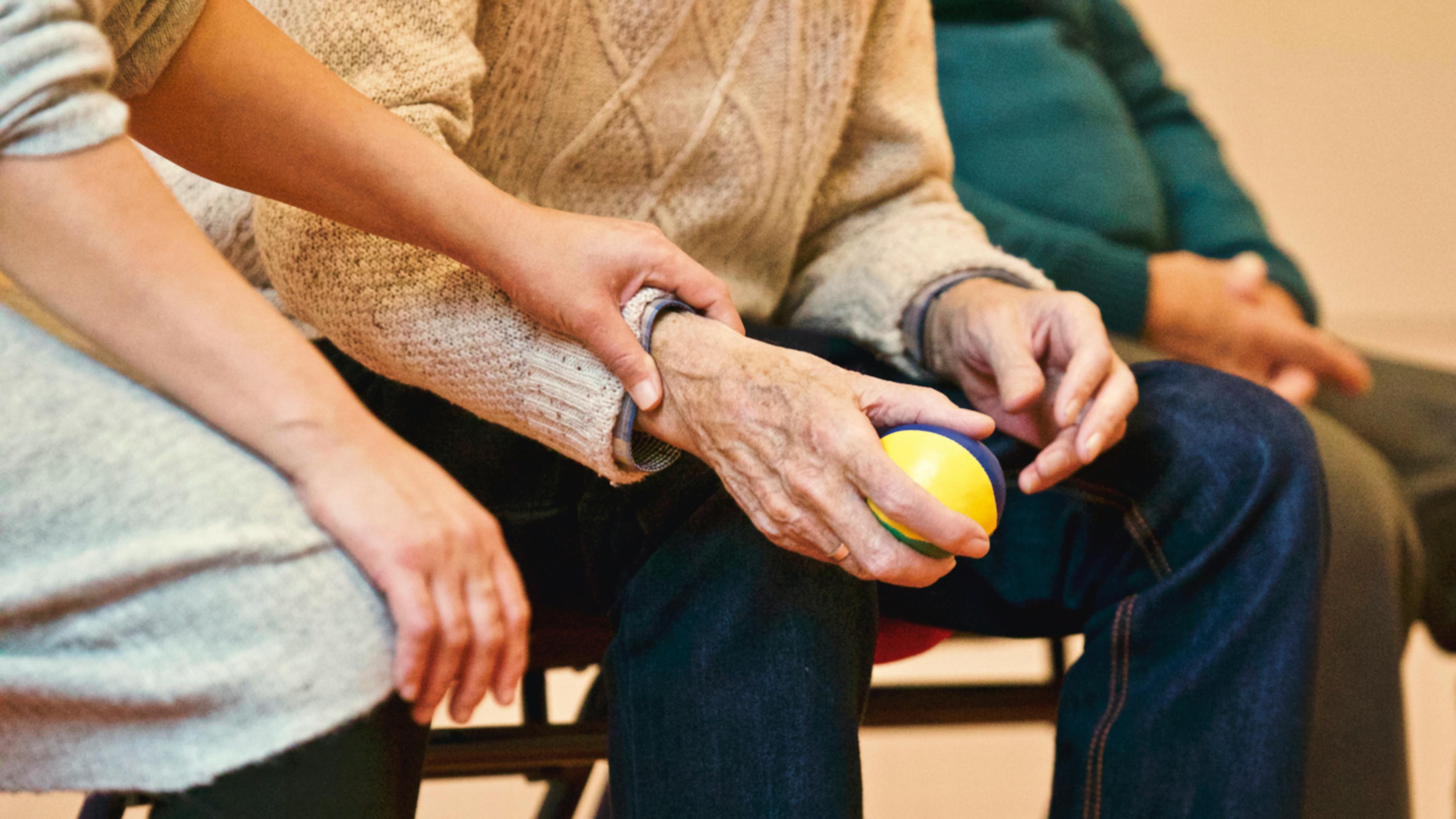
Person Holding a Stress Ball

Photo by Matthias Zomer from Pexels

When I applied for a care job, the challenges I assumed I was likely to face were exhaustion from all the cycling involved and the shame of working as an adult care worker, though I was a post graduate student in the UK. In my country people believe some Kenyans abroad do menial jobs (the jobs the locals do not want) to survive, to an extent they are right, I was doing it for survival. Here I was in a foreign country, running out of money and hardly successful in getting other jobs despite many applications. No updates on my work status were going to feature on my Facebook page. Little did I know, neither was I informed during my ‘comprehensive’ one-week training on the sort of abuses I would face daily and how no one would ever get punished for it. The brutal nature of working as a care worker made me swear, I would NEVER work as a care worker again.
Home care work mainly entails assisting mostly elderly individuals with activities of daily living including dressing, eating, taking care of their houses and shopping to more complex tasks such as end of life care.

  •       Verbal abuse

The verbal abuse you are likely to face as a care worker is mainly from service users, their next of kin or just rude care workers. Old age is not a cure for bad character. The trigger for abuse includes dementia, frustration with caring services or life generally and other factors such as tardiness.
A few days into my work, I was struggling when assisting an elderly service user get dressed, having only dressed myself before. The service user examined my nervous face as I tried to figure out how to get her arms in after successfully getting the blouse over her head and called me a ‘bitch.’ There was a second of silence that felt like a lifetime, I was shocked, my hands were trembling as I tried to make sense of the situation.
‘Was it because of my skin colour?’ thoughts raced across my head.
‘I am not a bitch.’ I said in a shaky voice.
‘Well.’ She went on. ‘You are bloody useless!’ Her face emotionless.
I had other nasty things I wanted to say.
‘Me, useless! At least I can take care of myself.’
 I really needed the job, also I would have felt way sillier a few days later when I learnt the service user had dementia. As the calls were mostly half an hour and at times one hour, I had no time to read the care plan, like a 50 page book.

I was once abused for being late.
‘Was I late?’
Off course!
Tardiness was largely as a result of a poorly organised rota, aimed at maximising profits for the care companies by fitting in as many elderly people within a specific period, even though you would need half an hour or so to get to the next call. Generally, care companies do not provide sufficient travel time. I had a bad Christmas 2018, not only was I alone and broke in a foreign country, I happened to be working on that rainy day. During that afternoon shift, I had a two carer call that was half an hour away by cycling from my previous call but they were generous enough to give me five minutes travel time, the second carer’s bike had a puncture subsequently we were approximately 20 minutes late for the call. The caregiver to the service user was not pleased and gave us a dressing down. As I was new, I maintained dignified silence, but the other care worker was all too happy to respond, insult for insult and rude word for rude word.  I swore I would never work again on Christmas day again, I quit my job 10 months later.
  •  Physical abuse

Care workers face a threat of physical abuse every day. I dreaded attending some of my calls as I was scared the service users would try and hit me. I know care workers who suffer life altering injuries in the hands of service users. You are likely to suffer from physical abuse from elderly persons with dementia. In one of my visits, I found myself running from a service user with dementia who I thought was chasing after me. Halfway through my ran, I realised, he was still sitting on his bed. So, he got up to chase me, then fell back on his bed as he was still holding the side railing, thinking back that was quite funny. Dementia calls mainly involved trying to avoid hits and kicks and explaining nicely to them why kicking someone is dangerous.
‘Why didn’t I report it? You ask.
I did
I was asked to refer to another care worker who knew how to handle him, however, she had not taken care of him for months and his dementia had progressed since then. I have watched other care workers get hit, beaten, bitten and kicked. The inaction, I must admit made me resentful towards people with dementia, even though it was not their fault.  It also made me realise, my employers did not care about me, who sends a somewhat petite female to care for a male dementia service user with a known history of violence.

  •          Sexual abuse

Yes, it does happen! As a young woman working as a care worker, I viewed most of the people I took care of as my grandparents or as good friends. Taking care of male clients was awkward generally for both parties, but old age is no cure for a pervert mind. Forms of sexual abuse include sexual harassment, inappropriate touching and unwanted sexual advances. Imagine as a new naïve care worker, an elderly man asking you to wash to his balls and around his balls. You comply because that is personal care, then he says
‘Can you be a bit rougher?’
As a new care worker, you stop to ponder the appropriateness of the request, it should be a fairly quick job washing someone’s genital. When I expressed my discomfort, the man started rubbing his own balls while making really uncomfortable noises until he finished, it was very uneasy and humiliating. Other female care workers reported this particular elderly man, I reported this to the office, more so when he started asking me to join him in the shower, not to be shy when rubbing his genitals and asking for unnecessary creams to be rubbed on his genitals. I was encouraged to ignore it. Where older individuals understand what they are doing is wrong, it should not be tolerated.

·         Exploitation
Care jobs in themselves are exploitative, they generally offer bad working terms and promise to leave you feeling really good at the end of the day for taking care of the vulnerable. When I started working, I was assured I would be working around my home area. I ended up having to use Google maps every single day and at the end they attempted to charge me for using a work phone for ‘non-essential’ purposes. When care firms state they will be paying you £9 an hour, that is a rough estimation. If you add all the unpaid travel time and gaps between your calls its roughly £4 pounds an hour. On most weekends that I worked I started work at 7am and finished at 9:30pm but I was only paid for roughly 7 hours. Often care calls have half an hour to hours gaps. On Christmas day, I realised if I cycled back to my house, I would not make it to my next call on time. For one hour, I stood outside in the rain as no shops were open and pondered how pathetic my life was, alone and miserable on Christmas day. You were also expected to cycle in the rain, strong winds and snow at no extra compensation. As a result, I was constantly exhausted and my motivation dwindled.

The care company would constantly call me on my days off and before classes and literally beg me to help them out by accepting calls. I swear, they were trained in manipulation tactics, I was made to feel bad if I did accept the call. As a result, my life revolved around care work, I was physically and emotionally exhausted and yet broke. When, I made mistakes other than tackling the actual cause ‘exhaustion’ I was disciplined so that the care company could prove it was me not them.

In the 9 months, I was racially abused, chased away from houses and humiliated. For service users with dementia, you learn to ignore it, for the others, you learn to stand your ground and demand respect. However, all these forms of abuse are likely demotivate you and slowly you find yourself caring less. Obviously, care workers are not provided with adequate training to deal with challenging circumstances or to care for individuals with complex needs. My one-week training did not cover how to deal with any form of abuse and no support was provided after. Further, care workers are not provided with adequate resources and time to avert abusive circumstances. No rational person would dream of the day when they start arresting dementia patients or even pervert 80 year old men (whose body are giving way to sickness, but minds have always been sick). Care workers play such an important role in taking care and providing comfort to vulnerable individuals and decongesting over stretched health services. Care companies and stakeholders need invest in better training and support for care workers.

Despite such abuses I had wonderful time as a care worker, I met such lovely individuals that taught me about life, love and death. These individuals are still my friends to date.